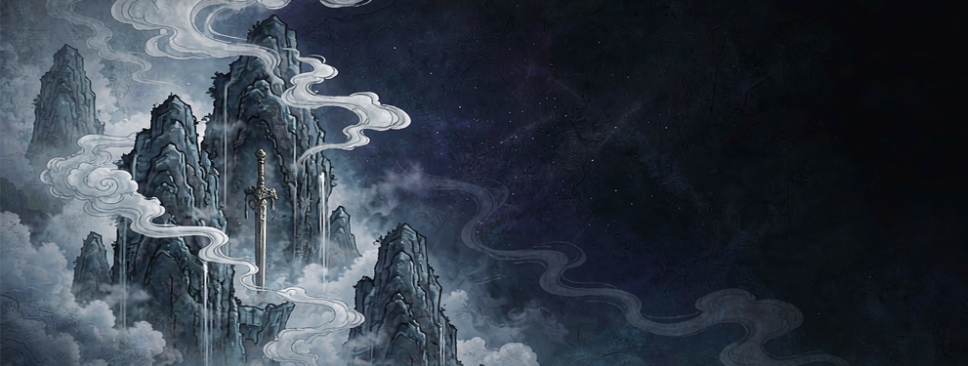



A Will Eternal — Chinese Cultural Concepts (Chapters 121–130)
What this is: a reference list, not a summary. Each entry explains one Chinese cultural, linguistic, religious, or social concept that appears in these chapters — what it means in Chinese culture at large, and why the novel uses it. Plot is mentioned only as evidence.
How to use it: scan the UPPERCASE headings. Every concept is separated by a divider rule. Terms follow the format 汉字 (PINYIN) — English gloss.
悟定 (WÙ DÌNG) — “Enlightenment-Settling”: The State Beyond Meditation
Category: 功法 · Practice
Chapters 126–130 build to the arc’s climax on 悟定 (wù dìng) — a state that the entire Northern Bank considers the measure of its geniuses, and that the hero reaches by a completely unorthodox route.
The name is a two-character cathedral:
- 悟 (wù) — “to awaken, to realise, to comprehend.” This is the character of the entire Buddhist tradition: 觉悟 (enlightenment), 悟道 (to awaken to the Way), 开悟 (opening to insight). Its lineage runs to the Bodhi tree and the 顿悟 (sudden enlightenment) of Chan Buddhism.
- 定 (dìng) — “to settle, fix, still.” This is *the standard Chinese translation of Sanskrit samādhi, and one of the three pillars of Buddhist training: 戒 (discipline), 定 (concentration), 慧 (wisdom). A 定 is a mind so still it can no longer be moved.*
悟定 therefore means “the settling that arrives through awakening” — and the novel’s account of it is almost a technical instruction: the practitioner’s soul floats in the void (魂浮虚无), becomes spiritually lucid (灵醒), and comes to understand the root of the self. The phrase is a genuine hybrid of Chan and Daoist meditation vocabulary, and its difficulty is the point.
Why it matters here: the novel constructs an entire comparative anatomy of talent around this word.
| Character | Time to 悟定 | Means |
|---|---|---|
| 鬼牙 (Gui Ya) | the record — fastest | innate genius |
| the hero | five times longer | no talent at all |
| the hero’s method | seventy days of obsessive observation + a sacrifice | accumulation |
And the novel’s verdict, delivered by the crowd itself, is the arc’s true subject: the Northern Bank sees how long he took and concludes his comprehension is inferior to Gui Ya’s — and they are right. What they cannot explain is why he got there anyway. The novel’s answer is the one line that most defines its ethics: 勤能补拙 (“diligence can patch over clumsiness”). 悟定 is the plot’s device for staging this argument with total clarity: the same name for the same state, reached by talent in one case and by 执着 (obsession) in the other — and the novel declines to say which is worth more, though its hero will always be the second kind.
魂浮虚无 / 灵醒 (HÚN FÚ XŪ WÚ, LÍNG XǏNG) — “Soul Adrift in the Void” and “Spiritual Waking”
Category: 功法 · Metaphysics
Chapter 127’s chapter-title phrase 魂浮虚无 and chapter 128’s 灵醒 name the two stages of the awakening sequence, and both are constructed from a rigorous, traditional soul-cosmology.
魂 (hún) is the yang soul — in the classical Chinese model a person possesses multiple souls: 魂 (three, yang, heavenly) and 魄 (seven, yin, earthly). At death, 魂 ascends and 魄 descends; the phrase 魂飞魄散 (“soul flies, 魄 scatters”) is the standard description of terror or annihilation, and 魂 has been the vessel of identity and personality throughout Chinese religiosity.
虚无 (xū wú) is “void” and “nothingness” — the word of the Daoist 虚无 (the primordial emptiness) and of 佛家’s 空, and one of the two characters in 虚无主义 (nihilism). To be adrift in the void is to have left the body and its objects behind.
灵醒 (líng xǐng) joins 灵 (spirit, efficacious, numinous) with 醒 (to wake). In Chinese, 醒 is a term of great delicacy: 清醒 (clear-headed), 醒目 (eye-catching), 大梦初醒 (waking from a great dream) — and the Buddhist-Daoist reading of ordinary life as a dream makes 醒 a technical term for awakening. The compound therefore denotes *not merely regaining consciousness but waking into the spirit.*
Why it matters here: the sequence’s three-stage structure 魂浮 (soul adrift) → 灵醒 (spirit wakes) → 本源返祖之血 (the back-flow of ancestral origin-blood) is the novel’s most cosmological passage, and its purpose is to make the beast-blood transformation a ritual rather than a mutation. The ancestor’s blood (the 天角墨龙’s golden drop) is *not injected but earned — it arrives only once the candidate has drifted out of self and woken into spirit. The vocabulary is doing the work that theology usually does in Chinese fiction: it converts a physiological change into an initiation.*
本源返祖之血 (BĚN YUÁN FǍN ZǓ ZHĪ XUÈ) — “Origin-Reverting Ancestral Blood”: Blood as Memory
Category: 灵兽 · Metaphysics
The arc’s central mechanic is 本源返祖之血 (běn yuán fǎn zǔ zhī xuè) — “the blood of origin that returns to the ancestor” — and each of its four terms carries weight:
| Character | Meaning | Cultural resonance |
|---|---|---|
| 本源 (běn yuán) | origin-source | the root of a lineage, the 本 as trunk/root |
| 返祖 (fǎn zǔ) | to return to the ancestor | the technical term for atavism (生物学: 返祖现象) |
| 血 (xuè) | blood | 血脉 (bloodline), 血统 (lineage) |
返祖 (atavism) is not a mystical word in modern Chinese — it is a biology textbook term, and *its use here is one of the novel’s most characteristic moves: borrowing a scientific term to give a magical process a biological aura. In folklore, the model is the classic Chinese belief that a creature can revert to its mythic ancestor — the carp transforming into a dragon at the Dragon Gate (鲤鱼跳龙门), or the snake that becomes a 蛟 and then a 龙 over ages. The whole tradition is the Chinese conviction that every creature carries a potential ancestral form dormant inside it, and that certain conditions wake it.*
Why it matters here: the arc’s plot is *a systematic therapy of bloodlines. The hero’s Beast-Flower divides the process into two exchanges:*
- Each contributing beast gives a drop of 本源返祖之血 — its dormant ancestral form — and in return is strengthened by the flower.
- The accumulated blood is used to gestate the single new beast.
The night-walking beast (夜行兽, later the 大黑狗) becomes the flower’s only regular client, because breaking into the void and perceiving the flow of one’s own origin is exactly what its nature is for — and it hunts down the specific beasts the hero has secretly coveted, dragging them in one by one, in exchange for the experience of being, briefly, the king of beasts in the flower’s illusion.
*The novel’s structural insight is that this is a market, not a sacrifice. The beast that gives blood gains something it values; the flower is a mutual-assistance institution thinly disguised as a monster. And the resulting creature, born of dozens of bloodlines, is described as 血脉混杂,意志无法掌控身躯 (mixed bloodlines, a will that cannot control the body) — the novel’s scientific honesty about the consequences of what the hero has done.*
天角墨龙 (TIĀN JIǍO MÒ LÓNG) — The Heaven-Horned Ink Dragon
Category: 灵兽 · Sacred Beasts
Chapter 137’s rescue is performed by 天角墨龙 (tiān jiǎo mò lóng) — the beast of the 古兽深渊 (Ancient Beast Abyss) — and its name assembles a small catalogue of Chinese dragon-lore:
- 天角 (tiān jiǎo) — “heaven-horn.” The dragon’s horn is the mark of its rank: Chinese dragons are graded by horn-shape (角龙 “horned dragon” is the mature, fully-transformed form), and 天 as a prefix means “celestial, imperial, sent from above.”
- 墨 (mò) — “ink.” A colour word of cultural depth — 墨 is the ink of calligraphy and painting, and 墨色 is the deep black of ink. A 墨龙 is a black dragon, which in the Five-Phase colour scheme is the water-phase creature.
- 龙 (lóng) — the dragon itself: the emblem of the emperor, of water and weather, of transformation, and the one creature of the Four Symbols that embodies power without malice.
Why it matters here: the dragon’s role in this arc is *the novel’s most traditional use of the creature: the great beast intervenes at a moment of a life not yet born. When the Beast-Flower’s creature cannot hold its mixed bloodline and is dying before it has arrived, the Ink Dragon offers a drop of its own golden blood — and visibly ages from doing so, watching the flower with tension and hope. That gesture is the dragon as 慈 (benevolence) rather than power — a being of cosmic seniority stooping to sponsor an unborn life. The third-generation ancestor’s aside — 可惜了一头五阶潜质的灵兽 — and his inability to change fate (“even he could not defy heaven”) complete the image: the novel’s highest powers are made sympathetic by being shown at the limits of their power. It is a very Chinese kind of dignity: the mighty, unable to save everything, doing the small thing they can.*
三代老祖 (SĀN DÀI LǍO ZǓ) — “Third-Generation Ancestor”: The Dead Who Still Govern
Category: 组织 · Lineage
The figure who intervenes at chapter 137 is named 三代老祖 (sān dài lǎo zǔ) — the “third-generation ancestor” — a white-robed, unmoving, unreadable elder at whose sight the four peak-echelon leaders immediately kneel.
The Chinese vocabulary of lineage generations is exact, and untranslatable without care:
| Term | Meaning |
|---|---|
| 一代 / 二代 / 三代 | first / second / third generation of a lineage |
| 老祖 (lǎo zǔ) | the patriarch, the founding elder |
| 祖师 (zǔ shī) | the founding master of a school or art |
| 掌门 (zhǎng mén) | the current head — the doorkeeper of the lineage |
*The crucial cultural point: 老祖 is not a job title but a rank of seniority so extreme that the holder is usually thought to be dead. In the sect-fiction tradition, ancestors pass into 闭关 (seclusion) and are presumed gone; their return is a catastrophe or a blessing, and always an event of institutional significance. The three-generation structure is also a direct borrowing from Chinese lineage practice — 祠堂 (ancestral halls) record the lineage in generations, and the elders of the hall hold authority that can override a living head of family.**
Why it matters here: the Third-Generation Ancestor’s appearance retrofits the entire arc with a hidden hierarchy. Its functions are all institutional:
- He knows how to extend the dying creature’s life nine days (吊命) and says so precisely — his authority is technical.
- He explicitly cannot defy fate (逆天改命) — the novel says his power has limits, and that this is why the creature must survive by its own will.
- His presence proves the sect has a layer the reader had not seen, and his interest in a stray Beast-Flower implies a watchful eye that will matter later.
The scene’s emotional architecture is traditional too: the highest authority arrives, kneels nobody, offers help at the limits of his power, apologises for its insufficiency, and vanishes in motes of light. This is not a rescue scene but a funeral ritual performed pre-emptively — and the novel gives it the full ceremonial weight of ancestor-worship, because that is what it is: the lineage extending itself to a child not yet born.
吊命 (DIÀO MÌNG) — “Hanging On To Life”: The Art of Buying Time
Category: 灵药 · Medicine
The Third-Generation Ancestor’s intervention is described with the exact technical verb 吊命 (diào mìng) — “to suspend a life” — and it is one of the most useful words in Chinese medicine and metaphor.
吊 (diào) is “to hang, to suspend, to hoist.” The compound 吊命 literally means “to keep a life hanging” — and the image is a life kept from falling, held by a thread, in a state between death and survival. Its medical register is clinical and fatalistic: in Chinese usage, 吊命 is what medicine does when it cannot cure — it keeps the patient alive through a crisis, to buy the body time to save itself.
Related vocabulary makes the register clear:
| Term | Meaning |
|---|---|
| 吊命 / 吊着一口气 | to hang on by a breath |
| 续命 (xù mìng) | to extend a life (by external means) |
| 回天乏术 | “no art can turn back heaven” — beyond saving |
| 撑过去 | to pull through |
Why it matters here: the novel uses 吊命 to make a theological statement about its own power system: even the sect’s most exalted ancestor can only extend the deadline — 九天 (nine days) — and must hand the outcome to the creature’s own will. The novel’s phrase is 能否活下去,从育兽花内挣扎出来,要看此兽的意志 — “whether it lives, whether it struggles out of the Beast-Flower, depends on this beast’s own will.”
This is the arc’s thesis, and it is a deeply Chinese one: 天助自助者 — heaven helps those who help themselves. The novel’s cosmic hierarchy *keeps its powers strictly limited so that its characters’ choices carry the weight. The Beast that struggles out of the flower in the next arc will have been saved not by the dragon’s blood but by its refusal to die* — and the novel wants you to know the difference.
铁蛋 (TIĚ DÀN) — “Iron Egg”: The Nickname as Relationship
Category: 语言 · Naming
Chapter 135–140’s comic centre is 铁蛋 (tiě dàn) — the hero’s name for his self-created battle-beast — and the name deserves attention because Chinese nicknames are a system, not a habit.
*铁蛋 is a classic Chinese rustic pet-name — 铁 (iron) + 蛋 (egg)* — and its cultural charge is specific:
- 铁蛋 is the archetypal “ugly-affectionate” name given to a child in rural China, alongside 狗剩 (dog-leftover), 二丫. The logic is protective superstition: a name too fine attracts envy and spirits; a name of iron and eggs doesn’t. This is the same 反 (inverse) logic as 贱名好养 (“a lowly name raises better”).
- 铁 also carries the whole vocabulary of strength and indestructibility (铁骨, 铁血, 铁汉), so the name simultaneously deflates and declares.
Why it matters here: the novel’s choice is comically exact. The hero, after a whole arc of engineering the strongest possible beast from dozens of bloodlines, ends up with a creature he calls “Iron Egg” — and the beast’s actual behaviour in chapters 138–140 earns the name in the worst possible way. Its documented preferences:
但凡是曾经招惹过白小纯的那些男弟子,一个个都要疯了 — “every male disciple who had ever crossed Bai Xiaochun went out of his mind.”
The irony is layered and complete:
- The hero’s intention — a supreme beast, worthy of a 荣耀弟子.
- The reality — a creature that persecutes men who offended his master, and (per the arc’s running gag) evidently prefers a different kind of company.
- The name — “Iron Egg,” rustic, protective, absurd, and a genuine term of affection.
*The novel’s craft here is worth naming: 铁蛋 is the only name in the book that the hero chooses for someone other than himself, and it is a pet-name, not a title. That single choice says everything about how he relates to living creatures — as family, not as instruments. And it is the reason the beast’s embarrassing behaviour lands as comedy rather than cruelty.*
筑基 (ZHÙ JĪ) — “Establishing the Foundation”: The True Threshold
Category: 修炼 · Stages
Chapter 140 turns the whole novel toward 筑基 (zhù jī) — “foundation establishment” — and it is worth laying out the system carefully, because everything in chapters 140–200 depends on it.
筑基 is literally “to lay a foundation” — the phrase is ordinary Chinese (筑基工程 “foundation-laying project”), and the cultivation novel borrows construction language for the entire ladder of advancement. The idea: the period of 凝气 (qi-condensation) is construction of a vessel; 筑基 is pouring the footing; everything above is building.
The novel’s own specification (chapter 140) is unusually precise and worth preserving:
| Grade | Requirement | Lifespan gained |
|---|---|---|
| 凡脉 (fán mài) — mortal channel | a 筑基丹 (foundation pill) | +100 years |
| 地脉 (dì mài) — earthly channel | 地脉之气 (earth-channel qi), obtained by contesting it in the sacred grounds | +200 years |
| 天脉 (tiān mài) — heavenly channel | 天脉之气, said to be legendarily rare | +500 years |
And the sub-grade within 地脉 is determined by how many 潮汐 (tides) the cultivator’s qi-sea can withstand — at least one, at most nine (至少一次,至多九次). The nine-tide quality mark is the standard 九 (maximal-yang) ceiling of the genre.
Why it matters here: the reveal converts the novel’s comic settings into a strategic map.
- 凡脉 by pill is available for contribution points — and the hero has millions. He could, right now, buy a hundred years.
- But he refuses the easy path, for a reason the novel states bluntly: 他有些不甘心,毕竟凡道筑基,只是增加一百年寿元. The boy whose stated life goal is 长生 considers the easiest available option beneath him — and this is the moment his greed becomes aspiration.
- The cost of the better road is other people’s lives. The 地脉 is not given but contested, and the novel’s description of the sacred grounds is unflinchingly mercenary: 每一次开启,四宗数百人进去,能成功者不超过几十人 … 地脉争夺,充满了血腥,物竞天择 (“each opening, several hundred of the four sects enter; those who succeed number fewer than a few dozen … the contest for earth-channels is drenched in blood; natural selection”).
That last phrase — 物天择 (the 物竞天择 of Darwin, in its standard Chinese translation, 天演论 phrasing) — is the novel telling you its genre’s true subject. 筑基 is not a level-up; it is an entrance exam for which thousands apply and dozens survive.
物竞天择 (WÙ JÌNG TIĀN ZÉ) — “Natural Selection”: A Modern Phrase in an Ancient World
Category: 概念 · Cosmology
Chapter 140 uses 物竞天择 (wù jìng tiān zé) — “things contend, heaven selects” — to describe the scramble for earth-channel qi, and the phrase’s history is one of the most interesting facts about modern Chinese thought.
*物竞天择 is the standard Chinese rendering of Darwin’s “natural selection,” coined in Yan Fu’s famous 1898 translation of On the Origin of Species, 天演论 (On Evolution). Its four characters are a compression of the Victorian idea into the classical Chinese register:*
- 物 (things/creatures) — the subject of selection;
- 竞 (to contend, to compete) — the verb;
- 天 (heaven/nature) — the selector;
- 择 (to choose, to select) — the outcome.
Its reception in China was seismic. Yan Fu’s translation arrived at the moment of national crisis and became, within a decade, the intellectual scaffolding of Chinese reform and revolution. 天演 (evolution) supplied the language of survival: 优胜劣汰 (the superior win, the inferior are eliminated), 弱肉强食 (the weak are meat for the strong), 落后就要挨打. A nineteenth-century British naturalist’s theory became, in Chinese, an ethical doctrine about the necessity of struggle — because the phrase 天择 (heaven selects) sits so comfortably beside 天命 (heaven’s mandate) and 天理 (heaven’s principle) that Darwin sounded like a sage.
Why it matters here: the novel’s cultivation world runs on this exact doctrine, and by naming it, the author makes the architecture explicit. The sacred grounds are contests with no mercy and no arbitration; the sect sends its best and accepts that most will die; and the narrative voice treats this as not a moral failing but a law. The genre’s 血战 (blood-war) and 厮杀 (killing) sequences are not gratuitous — they are the ritual expression of 物竞天择, which is the novel’s cosmology-cum-sociology. And the joke that carries the arc is that the contest’s victor will be a boy whose entire talent set is pills, speed, and running away. In A Will Eternal, heaven selects — but it appears to be selecting for something nobody expected.
陨剑深渊 (YǓN JIÀN SHĒN YUĀN) — The Fallen-Sword Abyss
Category: 地理 · Sacred Ground
The first of the three 筑基圣地 (foundation-establishment sacred grounds) is 陨剑深渊 (yǔn jiàn shēn yuān) — “the Abyss of the Fallen Sword” — and its name is a masterpiece of compressed myth.
- 陨 (yǔn) — “to fall from the sky.” This is the character for meteorites: 陨石 (meteorite), 陨落 (to fall, of a star or a great person). Its use is always celestial: a 陨 is a falling from the heavens.
- 剑 (jiàn) — sword.
- 深渊 (shēn yuān) — “the abyss, the deep.” In Chinese, 深渊 carries moral as well as physical weight — the 深渊 of 道德经 is the unknowable and the unfathomable.
The lore, as chapter 140 gives it: 陨剑深渊 is a giant sword fallen from 天外 (beyond the heavens), and it may contain 一丝天脉之气 — “a thread of heavenly-channel qi.” A sword that fell out of the sky, buried in the earth, containing the seed of transcendence is a synchronisation of several Chinese myth-complexes:
| Element | Traditional resonance |
|---|---|
| a sword as a cosmic object | the 神剑 of legend, and the sword as the emblem of the sage’s or general’s mandate (剑 as 君子’s weapon, the 尚方宝剑) |
| falling from heaven | 陨 / 天降 (heaven sends down) — from meteorites to the Mandate of Heaven |
| a contained world inside | the 洞天 (cave-heaven) tradition — an entire cosmos hidden inside a mountain, a gourd, or a sword |
Why it matters here: the Abyss is *the novel’s first proper sacred ground, and it is built on the genre’s oldest logic: the best treasure is a foreign object that fell into this world and does not belong to it. Everything that follows — the 剑身世界 (sword-body world) that is an ink-wash landscape on a slope, the 煞兽 (malign beasts) that consume qi, the 煞魂 (malign souls) who are the victims of the sword and come from 天外 — flows from that single premise. The abyss is a wound in the world where the outside leaks in, and the prize is not wealth but a fragment of a higher heaven.*
剑身世界 (JIÀN SHĒN SHÌ JIÈ) — The World Inside the Sword
Category: 地理 · Cosmology
Chapter 145’s entry into 剑身世界 (jiàn shēn shì jiè) — the world within the sword’s body — gives the novel its most beautiful piece of landscape writing, and one of its most culturally loaded.
The description: 天空是白色,大地是黑色,仿佛整个世界,就是一张水墨画. “The sky is white, the ground is black, as though the whole world were an ink-wash painting.” And the world is tilted, like a hillside.
水墨画 (shuǐ mò huà) — ink-wash painting — is China’s signature visual art, and its aesthetic is built on exactly the two qualities the novel names:
- 黑白 (black-and-white) with no colour — the ink means is *黑白 (ink and the unpainted white of the paper), and the cultural convention treats 留白 (reserved blankness) as positive content: the unpainted is the sky, the fog, the infinite.*
- Perspective by 散点 (dispersed focus) rather than vanishing point — Chinese landscape painting does not use a single eye’s viewpoint; it composes a walkable scene, so that the viewer’s gaze travels.
- The 山水 (mountain-water) subject — rivers, ranges, mist: the classical subject of the 文人 (literati) painter.
Why it matters here: making the inside of a fallen divine sword a tilted ink-wash world with rivers, mountains, and eyes like stars is *a statement of the novel’s cosmology: the foreign is also the classical. The world beyond the sky, which the earlier arcs have hinted at as 天外, looks like the aesthetic tradition this story is written out of — so that the highest heaven and the deepest culture are identified. It is also functionally perfect: the world’s 黑白 (black/white) and 倾斜 (tilt) make its wrongness perceptible at a glance, and the 眼睛如星辰 (eyes like stars) in the sky supply the arc’s menace without a single monster being shown.*
煞兽 / 煞魂 (SHÀ SHÒU, SHÀ HÚN) — Malign-Beasts and Malign-Souls: The Novel’s Ghost Taxonomy
Category: 灵兽 · Spirits
Chapters 147–150 introduce the Abyss’s two populations, 煞兽 (shà shòu) and 煞魂 (shà hún), and the novel’s taxonomy is one of the most precisely built in the genre.
煞 (shà) is a character of enormous supernatural charge, and it is the key to everything here:
| Usage | Meaning |
|---|---|
| 煞气 (shà qì) | a malignant, lethal aura; also, colloquially, a menacing manner |
| 煞星 | a baleful star / a person of evil fate |
| 凶神恶煞 | a demon of ferocity |
| 煞白 | “deathly pale” — literally “shà-white” |
Its etymology is a “kill” character (杀) plus an intensifier, and its folk meaning is an aura that harms living things by proximity. In *feng shui and Chinese occult practice, 煞 refers to structural, person-independent malevolence — a corner that produces ill fortune, a direction that must be avoided. It is malice without an agent.*
And that is the novel’s whole design. The two populations are defined by how they relate to qi:
| Entity | Nature | Behaviour |
|---|---|---|
| 煞兽 (malign beast) | living monsters born of the Abyss’s earth-channel environment | devour cultivators outright — the swallowed disciple simply vanishes, all qi consumed |
| 煞魂 (malign soul) | the souls of the creatures the sword’s owner killed, ten thousand years ago | have no intelligence, no memory; drift; anything they touch is annihilated |
The novel’s specification of the 煞魂 is its best piece of horror-writing in the arc:
可以肯定的是……这些煞魂生前,绝非……通天大陆之人,他们,来自传说中可以永恒的天外!
“It may be affirmed: these malign souls were, in life, not people of the Skypass Continent — they come from the legendary 天外, the place of eternity.“
They are described as wearing ancient garments and armour, some with scales, all incomplete — an arm lost, half a head, a great hole in the belly venting black qi — and *the horror is that they are not monsters but casualties. The four sects’ standing instruction to their disciples is the only correct response: 煞魂……绝不可招惹,遇之立避 — “absolutely do not provoke the malign souls; on meeting one, avoid at once.”*
Why it matters here: the novel’s ghost-lore closes the loop between its cosmology and its ethics. The 煞魂 *are the proof that the sword came from elsewhere and that elsewhere had people — and their mindlessness means the great powers of the universe can be reduced to weather. When the hero’s incorrect pill* wakes them (the white-clothed little girl with the blood-red skinless bear, who laughs into everyone’s ears), the arc’s real stakes appear: not “can he win,” but “has he woken something that should have stayed asleep.” It is the novel’s best demonstration that its comedy and its horror come from the same place — a boy who experiments on things he does not understand.
鬼夜行 (GUǏ YÈ XÍNG) — “Night-Walking of Ghosts”: The Sect’s Darkest Art
Category: 功法 · Arts
Named alongside 水泽国度 as one of the Ten Great Secret Arts is 鬼夜行 (guǐ yè xíng) — “night-walking of ghosts” — which chapter 101 reports was traded away from 紫鼎山 a thousand years ago and now belongs to 鬼牙峰 (Guiya Peak).
The phrase 鬼夜行 comes from the classic Japanese and Chinese image of 百鬼夜行 (hyakki yakō, “the night parade of one hundred demons”) — the belief that at certain times the demons and spirits of a place march in procession through the streets, and that a human who witnesses them must either hide or be taken. In Chinese, 鬼夜行 has the same charge: the horrifying nocturnal procession of the unquiet dead.
Why it matters here: the art’s name tells you the sect’s moral structure in three characters. The 鬼牙峰 (Fang-Tusk Peak) is a school whose members are described as shadowy figures whose appearance is indistinct, and whose signature art is the summoning of a ghost-procession — i.e., the sect’s Ten Great Secret Arts include one that is, openly, a necromantic horror. The novel never apologises for this, and it does not need to: cultivation fiction’s ethics are institutional, not absolute — an art is judged by whose lineage it serves.
The political detail matters more than the art: 鬼夜行 was once 紫鼎山’s, and it was traded. Chapter 101 uses this precedent to justify extorting 水泽国度 out of the Northern Bank — and the whole apparatus of these chapters is a market in supernatural technique. Techniques circulate by trade, theft, and marriage, and *the sect’s “ten greatest” list is really a portfolio exercised by whoever holds the shares. That is a sharp, unsentimental reading of how power actually moves — and the novel states it as a matter of bookkeeping.*
通天河 (TŌNG TIĀN HÉ) — The Sky-Reaching River: Geography as Destiny
Category: 地理 · Cosmology
The sect’s world is organised by 通天河 (tōng tiān hé) — the “Sky-Reaching River” — and the novel’s geography is a doctrine of civilisation, borrowed from Chinese history.
通天 (tōng tiān) means “reaching to heaven” — in Chinese it is a term of the highest reach (the 通天塔 of Babel, the 通天彻地 of a sage’s power) — and the novel’s river runs the length of the world, dividing and ranking the sects along it.
The structuring rule, stated in chapter 116: the sects are graded by their position along the river — 末流 (the last reach, the lowest), 下游 (lower), 中游 (middle), 上游 (upper) — and in the 北脉, the upstream, the final enemy, 九天云雷宗, awaits. The ancestral mission is to climb the river: 从通天河末流杀到下游,开宗立派, then to 中游, then 上游, and finally into the north.
The cultural model is unmistakable and it is the oldest in Chinese political geography: the river-valley civilisational ladder. Compare:
- 黄河 and 长江: the great rivers as the axis of Chinese history, with the upstream “cradle” and the downstream “frontier” reversed here — the novel makes upstream the civilised heights.
- *the Chinese notion of 上游/下游 as rank, not merely altitude: 力争上游 (“strive for the upper reaches”) is the standard metaphor for ambition and excellence, because upstream is harder and higher.*
- 末流 (mò liú) — “the last of the current” — is a term of contempt for the bottom of any hierarchy, used in classical Chinese for the dregs of a school or era.
Why it matters here: the river gives the novel an addressable history. In chapter 116 Han Zong’s oath names the complete programme: 守护真灵, climb from 末流 to 中游, to 上游, cross into 北脉, annihilate 九天云雷宗, and return to 祖地 to restore 寒门灵道. Every term there is geography doing the work of historiography — and it supplies the epic that the comic surface conceals. The reader who only sees a boy blowing up his house with aphrodisiacs is reading the middle of a ten-thousand-year war.
纸鹤飞满天 (REDUX) — The Image, Fully Unpacked
Category: 概念 · Imagery
This entry continues the treatment begun in Culture_10.
Chapter 121’s title, 纸鹤飞满天 — “paper cranes fill the sky” — deserves one more layer now that the sequence is complete, because *the full arc (chapters 120–123) shows what the image is for.*
The components:
- 纸 (paper) + 鹤 (crane) — the origami crane, symbol of long life and of ceremonial summons.
- 飞满 (fly-full) — “filled to the brim with flying”, a construction of overwhelming plenitude (compare 座无虚席, 人山人海).
- 天 (sky) — the whole of it.
The literary echo the title invokes: the classic line 白雪纷纷何所似 … 未若柳絮因风起 — “what does the falling snow resemble? … better: willow catkins rising on the wind” — is *the canonical Chinese exercise in describing abundance with an image, and 纸鹤飞满天 uses exactly this rhetorical move, replacing snow or catkins with ceremonial cranes.*
Why it matters here: the arc gives the image a full ironic career:
| Stage | Meaning |
|---|---|
| One crane arrives | a sacred formal summons — honoured, feared |
| Ten arrive | a trend |
| Two thousand arrive | a social movement |
| Five thousand, stacked in a hill outside his door | bureaucratic spam |
| And then the hero draws them out and starts opening the weakest | the sacred reduced to a queue |
The novel’s craft is that it never mocks the crane. Each paper crane is still a binding summons, still unsettling to the heart, still a genuine obligation — and that is precisely why the pile is funny. The joke is *not that the cranes are worthless; it is that piety in bulk becomes logistics. A Will Eternal* earns its comic reputation on scenes like this: a beautiful, ancient, ceremonial image, multiplied past its sacred limit, and handed to a boy who files them by weakness.